


From Prodrug to Active Metabolite: Why 2-Hydroxyflutamide Is the Key Driver of Antiandrogen Receptor Activity
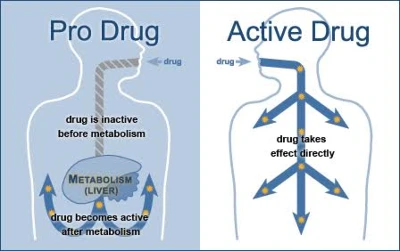
In endocrine pharmacology and oncology, the "prodrug" concept is a cornerstone of rational drug design. Many therapeutic agents show minimal biological activity upon administration and require biotransformation in the liver to exert their full pharmacological effects.
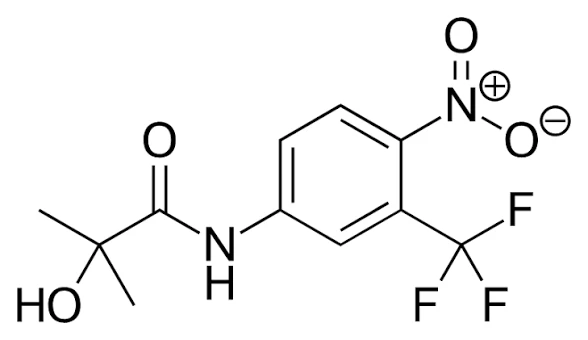
The non-steroidal antiandrogen "flutamide" is a classic example of this biochemical mechanism. Although widely recognized in the scientific literature, flutamide functions primarily as a prodrug; its principal active metabolite drives most of its clinical efficacy and pharmacodynamic actions-2-hydroxyflutamide (also referred to in professional literature as hydroxyniphtholide or SCH 16423).
Understanding the metabolic conversion of flutamide to 2-hydroxyflutamide is essential for grasping androgen receptor (AR) signaling pathways, cellular binding affinity, and the design of modern in vitro experiments.
Biotransformation Pathway: Hepatic Conversion Mechanisms
Upon entering the body, flutamide undergoes rapid hepatic clearance and enzymatic oxidation. Hepatic Phase I cytochrome P450 enzymes, specifically CYP1A2 and CYP3A4, primarily catalyze this metabolic transformation.
Flutamide (prodrug) ──[hepatic CYP1A2/CYP3A4-mediated hydroxylation]──> 2-hydroxyflutamide (active molecule)
Through regioselective hydroxylation at the second carbon position, the liver produces 2-hydroxyflutamide-a structural modification that significantly alters the compound's biochemical properties:
Binding Affinity: Unmodified flutamide exhibits relatively low binding affinity for the nuclear androgen receptor. After hydroxylation, 2-hydroxyflutamide's binding affinity increases significantly, making it the primary active agent blocking androgen signaling in target tissues.
Systemic bioavailability: After oral administration of the parent compound, plasma concentrations of 2-hydroxyflutamide are substantially higher than those of unmetabolized flutamide, establishing it as the principal driver of anti-androgenic effects in vivo.
Mechanism of action: Competitive antagonism at the cellular level
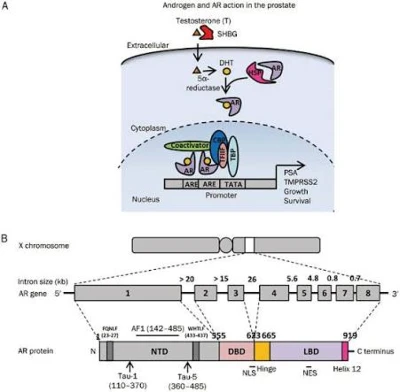
At the molecular level, 2-hydroxyflutamide functions as a competitive antagonist of the androgen receptor (AR) ligand-binding domain (LBD).
1. Competitive displacement of ligands
Endogenous androgens-specifically dihydrotestosterone (DHT) and testosterone-normally bind to the androgen receptor (AR) to form stable ligand-receptor complexes. 2-hydroxyflutamide competes directly with these endogenous ligands for the binding site, significantly reducing overall androgen receptor occupancy.
2. Transcriptional inhibition
Upon binding to the receptor, 2-hydroxyflutamide induces a conformational change that prevents the receptor from reaching a stable state. Consequently, the androgen receptor (AR) complex cannot effectively translocate into the cell nucleus or bind to androgen response elements (AREs) on genomic DNA. As a result, transcription of androgen-regulated downstream genes is effectively inhibited.
3. Accelerated receptor turnover
Cell biological studies indicate that the complex formed between 2-hydroxyflutamide and the androgen receptor (AR) alters the receptor's half-life, accelerating the protein's
4. Structural Modulation of Mutant Receptors
In structural biology studies, 2-hydroxyflutamide provides critical baseline data for understanding structural mutations within the androgen receptor's ligand-binding domain (LBD). While canonical antiandrogens effectively suppress wild-type AR signaling, specific point mutations-such as the prevalent AR-T877A variant-can alter the receptor's binding pocket topology. Research demonstrates that 2-hydroxyflutamide engages distinct hydrogen-bonding networks with amino acid residues in the LBD, influencing whether the receptor assumes an active or inactive transcriptional conformation. Mapping these stereochemical interactions allows researchers to elucidate mechanisms of secondary treatment resistance and design next-generation targeted nuclear receptor modulators.
Scientific Applications in Modern Laboratory Research
Because 2-hydroxyflutamide acts as a direct ligand-rather than an inactive precursor-high-purity crystalline 2-hydroxyflutamide has become an essential tool in life science laboratories and biopharmaceutical research.
In Vitro Cell Culture and Androgen Receptor (AR) Screening
When conducting cell-based experiments (such as those evaluating prostate cancer cell lines like LNCaP, 22Rv1, or VCaP), the use of the prodrug flutamide can lead to unstable baseline data. This is because standard cell culture systems often lack sufficient functional hepatic CYP450 enzymes to convert flutamide into its active form at a physiological rate.
By incorporating 2-hydroxyflutamide powder directly into the culture medium, researchers can bypass the metabolic conversion step entirely. This enables the direct, reproducible, and quantifiable assessment of androgen receptor inhibition in an in vitro environment.
Receptor Mutation and Drug Resistance Analysis
In pathological research, long-term androgen deprivation therapy can lead to point mutations in the androgen receptor gene (such as the well-studied AR-T877A mutation). In structural biology, 2-hydroxyflutamide is often used as a reference compound to analyze how point mutations alter ligand specificity, providing critical insights into drug-resistance mechanisms.
Analytical Reference Standards
In bioanalytical chemistry, 2-hydroxyflutamide is commonly used as a high-grade reference standard for liquid chromatography-mass spectrometry (LC-MS) analysis. It is widely used to determine metabolic clearance rates quantitatively, monitor drug-drug interactions, and establish pharmacokinetic profiles in preclinical models.
Technical Specifications and Handling Standards
For laboratory researchers and biopharmaceutical professionals using 2-hydroxyflutamide as a raw material or analytical standard, understanding its physical and chemical parameters is essential to ensure accurate experimental results.
Solubility and Stability:
Solubility in Organic Solvents: This crystalline powder is highly soluble in organic solvents commonly used in cell-based assays; concentrations of 25 mg/mL or higher can be achieved in dimethyl sulfoxide (DMSO), ethanol, and N, N-dimethylformamide (DMF).
Storage Protocols: Store solid powder samples in a sealed, dry container under refrigerated or frozen conditions, protected from light.
Handling of Solutions: Aliquot stock solutions prepared in organic solvents into single-use portions and store them appropriately to prevent chemical degradation during long-term studies.

The Importance of Metabolite-Focused Research
The conversion of flutamide into 2-hydroxyflutamide highlights a fundamental principle in modern pharmacology: the administered compound is not necessarily the substance that exerts the actual biological activity. By focusing experimental efforts directly on 2-hydroxyflutamide, life science researchers gain a precise, direct-acting tool to dissect androgen receptor mechanisms while eliminating the confounding variable of metabolic conversion rates. As research into nuclear receptor signaling continues to advance, high-purity active metabolites remain a cornerstone for both academic inquiry and biopharmaceutical innovation.