


In the modern cosmetics industry, achieving a bright, even skin tone has traditionally relied on potent exfoliants or very high concentrations of active compounds. For many people prone to hyperpigmentation, stubborn dark spots, or sun-induced dullness, common approaches-such as alpha-hydroxy acids (AHAs), high-dose vitamin C, or retinoids-often come with significant side effects. These include a compromised skin barrier, redness, photosensitivity, and the recurring, troublesome issue of post-inflammatory hyperpigmentation (PIH).
However, advances in biomolecular dermatology are driving a shift in the industry: moving away from "chemical exfoliation" toward "targeted cellular signaling regulation." Rather than stripping away surface pigmentation or aggressively suppressing downstream enzymatic reactions, cosmetic researchers are now focusing on the "root source" of melanogenesis. These initial biological triggers prompt melanocytes to produce pigment.
Investigating the Triggers of Pigmentation: The α-MSH Cascade
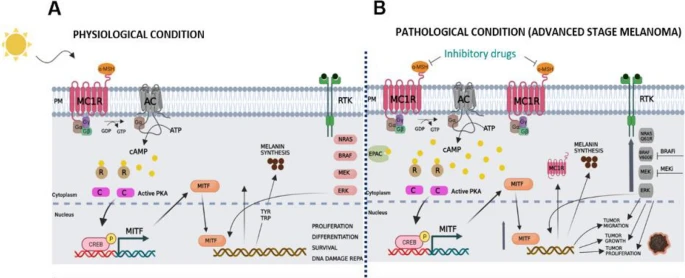
To understand how signal-blocking technology works, one must first grasp how dark spots and tanning develop. When skin is exposed to ultraviolet (UV) radiation, environmental stressors, or internal micro-inflammatory states, surrounding keratinocytes release a peptide known as alpha-melanocyte-stimulating hormone (α-MSH).
This hormone acts as a "biological alarm." It travels between skin cells and binds to melanocortin 1 receptors (MC1R) on the surface of melanocytes (the cells responsible for pigment production). Once α-MSH binds to its receptor, it signals the cell to activate tyrosinase, accelerating melanin synthesis. This melanin is subsequently transported to the skin's surface, manifesting as widespread tanning, age spots, melasma, or localized post-inflammatory hyperpigmentation.
Traditional skin-brightening strategies typically intervene later in this biological chain. Tyrosinase inhibitors-such as kojic acid or arbutin-suppress the enzyme during its metabolic process, while exfoliating acids promote shedding of heavily pigmented epidermal cells by accelerating cell turnover. Although effective, these approaches often fail to address the underlying biological regulatory mechanisms; consequently, once use is discontinued, melanin production typically resumes.
A Paradigm Shift: From "Enzyme Inhibition" to "Precision Regulation at the Receptor Level"
To understand the evolution of modern skincare, one must examine how hyperpigmentation has been managed over the past few decades. Early cosmetic science focused almost exclusively on "broad-spectrum enzyme inhibition." Active ingredients at the time were designed to block tyrosinase-the enzyme that converts tyrosine into melanin-often after cells had already received the signal to produce pigment. While this "reactive intervention" was effective to a degree, it frequently required very high concentrations of active ingredients. This not only increased the risk of cytotoxicity and irritation but also risked a "rebound" in pigmentation once product use was discontinued.
The modern biotechnological paradigm shifts the focus upstream, enabling "precision regulation at the receptor level." Rather than merely interfering with metabolic processes already underway, advanced skincare strategies now precisely target specific receptors on the cell surface-the "gateways" that receive environmental and physiological triggers. By occupying these receptor sites, active molecules can prevent activation of intracellular signaling pathways at the source, thereby preempting tyrosinase expression.
This mechanism of action offers significant advantages for both formulators and end-users:
Minimized cellular stress: By blocking signal initiation, skin cells are spared from entering an "overloaded" state of pigment synthesis.
Enhanced safety and tolerability: Molecules that target specific receptors possess high specificity, reducing "off-target" biological effects and eliminating the need for harsh, exfoliating acids.
Long-term skin tone stability: By interrupting the initial signaling cascade, this approach helps break the cycle of recurring post-inflammatory hyperpigmentation (PIH) and dark spots caused by chronic sun exposure.
As dermatological research continues to uncover the intricacies of intercellular communication, "receptor-level signal interception" is rapidly becoming the "gold standard" for safe, long-lasting skin-brightening solutions that also help maintain skin barrier integrity.
Intercepting Signals at the Biological Source
A cutting-edge frontier in preventive skincare is "receptor-level antagonism"-neutralizing triggering signals before they can be conveyed as cellular instructions.
By introducing biomimetic agents that bind to melanocyte receptors without activating them, formulators can effectively block $\alpha$-MSH (melanocyte-stimulating hormone) from attaching to its receptor sites. Because this "key-and-lock" interaction is prevented, the signal that would otherwise trigger excessive melanin production is not transmitted. Acting as a "cellular signal interceptor," this mechanism helps the skin maintain a natural, even tone, even under environmental stressors.
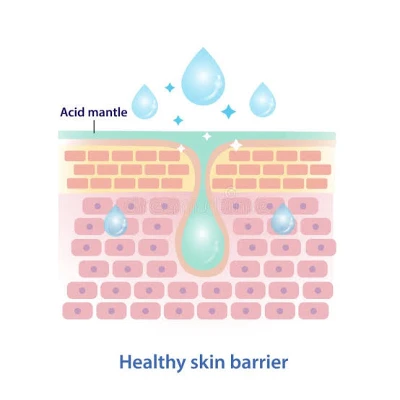
Since this signal-interception approach targets receptor affinity rather than relying on chemical exfoliation, it eliminates the need for acidic pH levels or exceptionally high concentrations of active ingredients. This enables the development of highly effective skin-tone management products that also preserve the structural integrity of the skin barrier.
One such functional active ingredient that employs this upstream signal-blocking mechanism is Und-L-OMe (chemically known as Methyl Undecenoyl Leucinate).
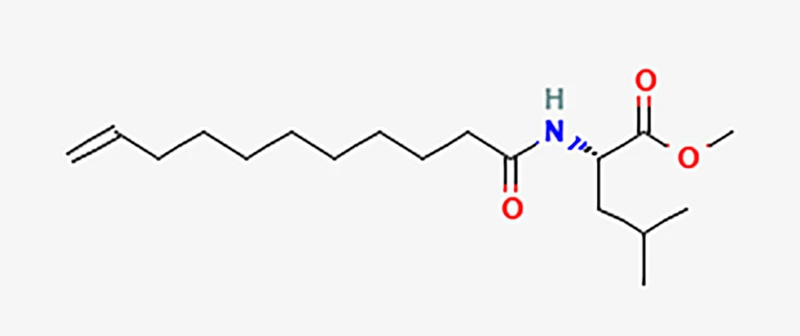
As a lipopeptide-a lipid-modified amino acid derivative-this specialized ingredient is synthesized by coupling an undecenoyl fatty acid chain with a leucine ester. This structure imparts excellent lipophilicity, enabling efficient penetration through the epidermal lipid barrier to reach target receptor sites on the melanocyte membrane, without the need for potentially irritating chemical penetration enhancers. Functionally, undecylenoyl leucine methyl ester (Und-L-OMe) acts as a competitive antagonist to $\alpha$-melanocyte-stimulating hormone ($\alpha$-MSH). By occupying MC1R receptors on the surface of melanocytes, it blocks $\alpha$-MSH binding, thereby downregulating the intracellular signaling cascades that trigger tyrosinase gene expression. Rather than merely inhibiting downstream enzymatic activity, it intercepts pigment-synthesis signals at their source. In terms of formulation, Und-L-OMe is an oil-soluble active ingredient that can be seamlessly incorporated into oil phases, anhydrous systems, lipid emulsions, and nanocapsule carriers. It is chemically stable under standard skincare processing conditions and retains full biological activity within the skin's physiological pH range (4.5 to 6.5). This high degree of compatibility makes it an ideal choice for a variety of gentle skincare products, such as acid-free, skin-barrier-friendly brightening serums, post-sun repair creams, and daily pigmentation-care products designed for sensitive skin.
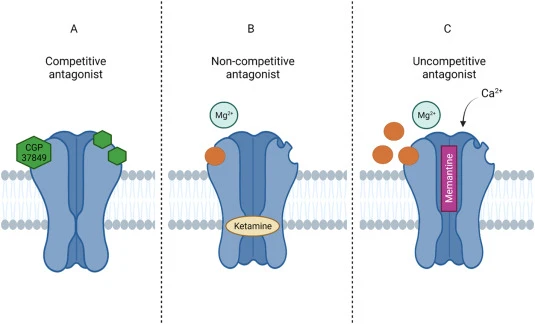
Research indicates that undecylenoyl leucine methyl ester (Und-L-OMe) functions primarily as a selective antagonist to $\alpha$-MSH (melanocyte-stimulating hormone). By occupying target receptor sites on melanocytes, it prevents the hormone from binding, which in turn downregulates genes responsible for triggering the melanogenesis cascade. Beyond its primary role in intercepting pigmentation signals, this lipid-amino acid structure also possesses auxiliary anti-inflammatory properties, helping to suppress skin redness and minor irritation.
Implications for Sensitive Skin and Modern Formulations
The transition toward signal-blocking actives represents a major development for sensitive skin care and post-procedure maintenance. Individuals who suffer from reactive skin conditions, broken barrier function, or retinoid intolerance often struggle with conventional hyperpigmentation therapies.
By incorporating non-irritating, receptor-targeted actives such as Methyl Undecenoyl Leucinate into daily regimens, cosmetic formulators can offer comprehensive brightening and spot-reduction solutions that avoid stripping the stratum corneum.
Industry experts anticipate that as consumer awareness of skin barrier health grows, upstream signal-interception ingredients will increasingly anchor next-generation serum, cream, and sun-repair formulations globally.