


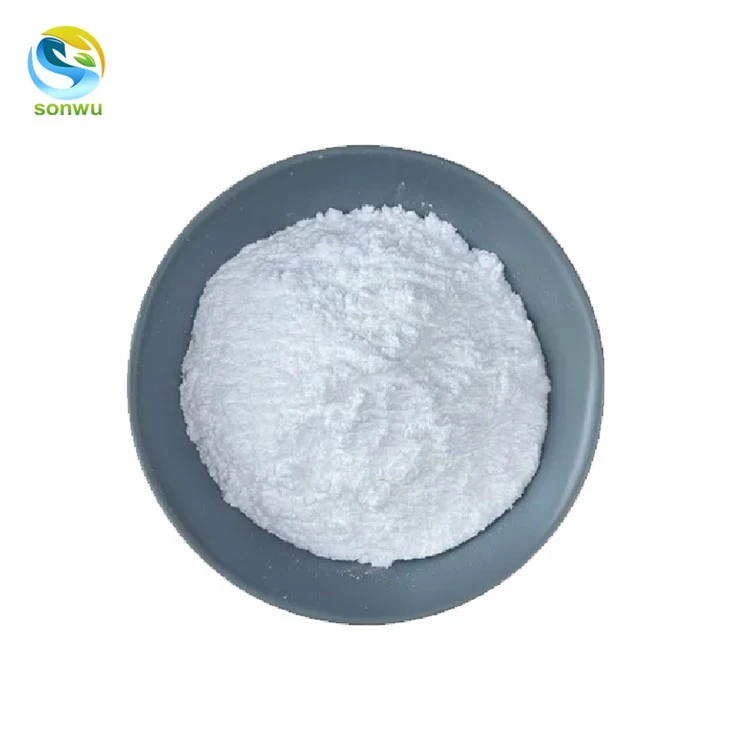



High Standards·Traceability·Scalability
Please feel free to contact Xi'an Sonwu Biotech Co., Ltd. for any products you are interested in.
2-Chloro-4-fluoro-3-methylbenzonitrile description
2 chloro 4 fluoro 3 methylbenzonitrile powder is an aromatic nitrile compound with a benzene ring backbone substituted with chlorine, fluorine, methyl, and cyano groups, resulting in a distinct regiochemical substitution pattern. This combination of functional groups makes it a valuable building block in organic chemistry and the fine chemical industry. Structurally, the cyano group is a key functional group that can undergo various subsequent transformations; the chlorine and fluorine substituents-as halogens-influence the aromatic ring's electronic properties and facilitate the introduction of further functional groups and structural modifications. The methyl group adds to the aromatic ring's substitution diversity, making the compound suitable for synthesizing aromatic derivatives with specific substitution patterns. 2-Chloro-4-fluoro-3-methylbenzonitrile primarily serves as a synthetic intermediate for constructing more complex aromatic compounds. Its well-defined substitution pattern and multifunctional structure offer significant potential for research and development in fields such as medicinal chemistry, fine chemicals, and the design of novel organic molecules. If you want to learn more about the 2 chloro 4 fluoro 3 methylbenzonitrile compound supplier, contact Xi'an Sonwu Biotech Co., Ltd.
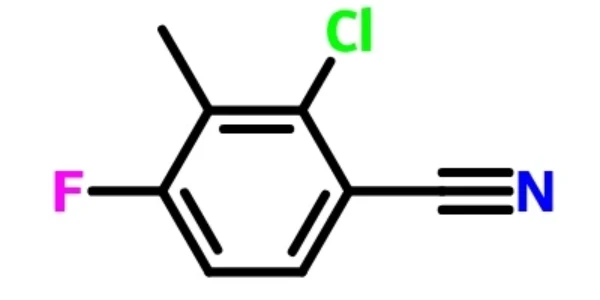
2 chloro 4 fluoro 3 methylbenzonitrile buy
Xi'an Sonwu Biotech Co., Ltd. is a peptide raw material supplier with peptide technology at its core and an international market orientation. Sonwu specializes in the R&D, production, and global supply of functional peptides and polypeptide raw materials. Sonwu's products are widely applied in multiple fields, including muscle building, beauty and anti-ageing, hair health, weight management, nootropics, and pharmaceutical raw materials.
Sonwu's products are widely used in customers' R&D and industrialization projects worldwide. As a result, Sonwu has received extensive feedback on its products. If you need the 2 chloro 4 fluoro 3 methylbenzonitrile compound, please contact Xi'an Sonwu.
Xi'an Sonwu provides large-scale production services and can also provide sample packages to customers first.
|
Form |
Sample Amount |
The Minimum Quantity |
|
Powder |
1g |
1g |
Customers' Good Comments

OEM Service
Xi'an Sonwu not only supplies high-quality 2 chloro 4 fluoro 3 methylbenzonitrile powder but also provides flexible product solutions based on customer requirements.
Firstly, for customized products, customers need to provide information such as the product's CAS number and synthesis route. Sonwu will help you confirm whether customization is possible based on your requirements or provide professional suggestions.
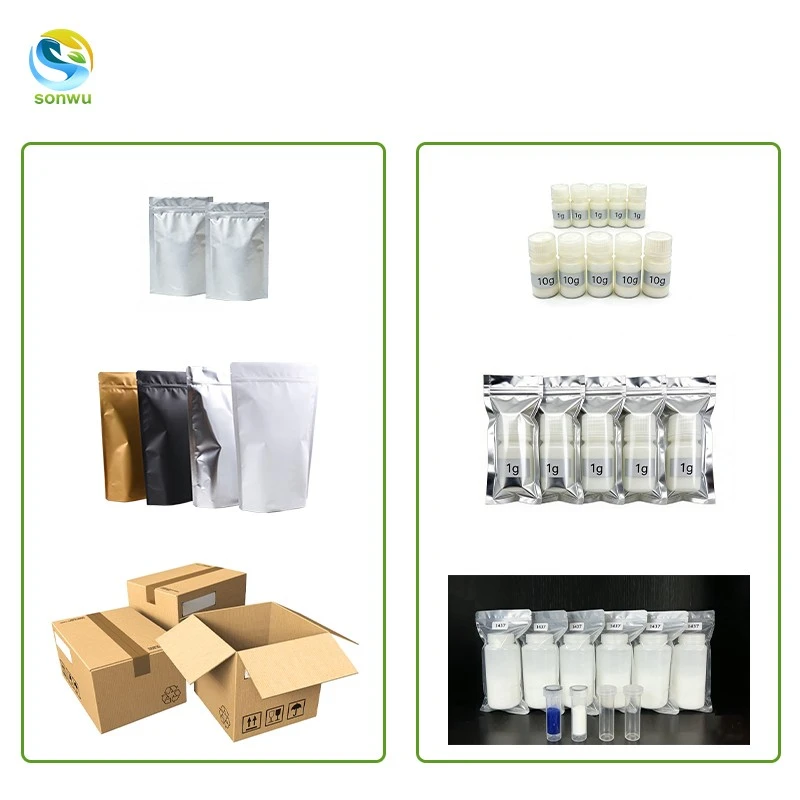
Second, for customised packaging, Sonwu offers a minimum packaging size of 1g and can provide customised packaging upon request.

Applications of 2-Chloro-4-fluoro-3-methylbenzonitrile
1. As an Aromatic Structural Building Block
2-Chloro-4-fluoro-3-methylbenzonitrile is a polysubstituted aromatic nitrile; the specific positioning of its chlorine, fluorine, methyl, and cyano groups on the benzene ring gives the molecule a well-defined regiochemical structure. In organic synthesis, such structurally distinct aromatic fragments serve as building blocks for constructing complex molecules. The cyano group is not only a key structural component but can also undergo subsequent functional group transformations, enabling the introduction of other structural elements. Meanwhile, the chlorine and fluorine substituents modify the electronic environment surrounding the aromatic ring, offering greater design flexibility for structural modification. Consequently, this compound serves as an aromatic scaffold with a precise substitution pattern, providing a basis for subsequent molecular construction.
2. Providing diverse scope for subsequent molecular modification
2-Chloro-4-fluoro-3-methylbenzonitrile features a combination of distinct substituents-including a cyano group, halogens, and a methyl group-offering significant potential for structural modification. In fine organic synthesis, these diverse functional groups can serve various roles in structural linkage or transformation, allowing the molecule to serve as a starting point for designing and constructing aromatic derivatives. The cyano group provides a foundation for introducing other functional moieties, while the halogen substituents on the aromatic ring enable further tuning around the core scaffold. Multiple substituents also let chemists modify specific regions of the structure to meet the requirements of a target molecule. This flexibility supports structural optimisation while preserving the aromatic core.
3. Suitable for the structural design of complex organic molecules
Aromatic ring systems are frequently used to build molecular structures with specific spatial and electronic properties in domains such as medicinal chemistry, fine chemicals, and the creation of novel organic compounds. 2-Chloro-4-fluoro-3-methylbenzonitrile is a useful structural building block for complex organic molecules because of its distinct polysubstituted benzene ring. The methyl group modifies the local steric environment of the aromatic ring, the cyano group increases the potential for functionalization, the fluorine atom modifies the molecule's electronic properties and structure, and the chlorine atom provides opportunities for further modification. Together, these substituents allow the aromatic core to be extended in different directions. As a result, the compound's main value lies in its ability to provide a solid basis for creating and refining complex aromatic molecules.
Mechanism of 2-Chloro-4-fluoro-3-methylbenzonitrile
1. Electronic Effects and Structural Role of the Cyano Group
The cyano group (–CN) in 2-chloro-4-fluoro-3-methylbenzonitrile is a crucial functional group that influences the molecule's electronic structure. Because it is strongly electron-withdrawing, the cyano group alters electron distribution across the benzene ring, creating distinct electronic environments at different positions on the aromatic ring. This electronic effect serves as a key basis for the compound's participation in subsequent structural transformations. Furthermore, the cyano group acts as a structural gateway for further functionalization, allowing for conversion into other nitrogen-containing structures and the consequent extension of the molecular scaffold. In this compound, the cyano group is more than a simple substituent; it serves as a key functional site linking the aromatic framework to subsequent molecular structures, with its electronic properties and transformability playing integral roles in the molecule's chemical behaviour.
2. Electronic Modulation by Fluorine and Chlorine Substituents
This molecule bears both fluorine and chlorine substituents, which influence the electron distribution around the benzene ring through the inductive effect. The fluorine atom, in particular, exerts a significant electron-withdrawing inductive effect, altering electron density at various positions on the aromatic ring and thereby influencing the molecule's overall reactivity. The chlorine atom similarly modulates the aromatic ring's electronic environment while providing a modifiable site for further molecular design. Because the fluorine, chlorine, and cyano groups do not act in isolation, they collectively shape the aromatic ring's electronic environment, resulting in a polysubstituted aromatic system with a specific electron distribution. Consequently, a key structural feature of this compound is the modulation of the aromatic ring's reactivity and structural characteristics through the combined electronic effects of these diverse substituents.
3. Structural Regulation Mechanism Driven by Synergistic Multi-Substituent Effects
A distinctive feature of 2-chloro-4-fluoro-3-methylbenzonitrile is the simultaneous presence of chlorine, fluorine, methyl, and cyano groups on the same benzene ring; the electronic and steric effects of these diverse substituents collectively determine the molecule's overall structural characteristics. While the cyano and halogen groups exert varying degrees of electron-withdrawing influence, the methyl group exhibits electron-donating inductive character, creating a complex electronic environment shaped by the interplay among these groups. Furthermore, the specific positioning of these substituents on the benzene ring modulates the electron distribution and steric environment in the ortho and meta regions. This synergistic mechanism imparts distinct regioselectivity and structural recognition capabilities, laying the groundwork for subsequent targeted molecular modifications. From a molecular design perspective, the compound's value lies in this tunable aromatic structure, which arises from the combined action of multiple substituents.
Factory
Xi'an Sonwu Biotech Co., Ltd. has established a complete technology platform covering peptide molecular design, custom synthesis, precision purification, structural identification, and quality control. Strictly adhering to international quality management standards, the company ensures its peptide raw materials meet overseas customers' high-end requirements for purity, stability, and batch consistency.
In the future, Sonwu plans to continue advancing peptide technological innovation, broaden its network of international collaborators, and strive to establish itself as a reliable, long-term supplier of peptide raw material solutions to clients worldwide.


Certificates

CERES

HACCP

HALAL

ISO9001

ISO14001

ISO22000
Packaging

Logistics

In addition to ensuring product quality, another critical aspect is ensuring clients receive goods smoothly. To meet specific needs, Xi'an Sonwu offers flexible courier options.

FAQ
1. Why is the nitrile group important in this compound?
The nitrile group is a key functional group in 2-chloro-4-fluoro-3-methylbenzonitrile. It influences the aromatic ring's electronic environment and serves as a key site for subsequent structural transformations. Consequently, the nitrile group expands the compound's utility as a synthetic intermediate.
2. What role do the chlorine and fluorine groups play?
The chlorine and fluorine substituents influence the aromatic ring's electronic environment and collectively modulate the molecule's structural characteristics. In molecular design, halogen substitution offers diverse options for further modifying the aromatic scaffold; thus, these two groups are integral to the compound's structural profile.
If you are looking for a 2 chloro 4 fluoro 3 methylbenzonitrile compound supplier, contact Xi'an Sonwu. Click the email to get high-quality 2 chloro 4 fluoro 3 methylbenzonitrile powder.
Email: sales02@sonwu.com
Hot Tags: 2 chloro 4 fluoro 3 methylbenzonitrile powder, China 2 chloro 4 fluoro 3 methylbenzonitrile powder manufacturers, suppliers, factory