


The way scientists study body fat is evolving. Researchers are moving beyond a sole focus on total body weight or Body Mass Index (BMI) to increasingly examine where fat is stored and how different fat depots respond to biological signals. A key area of interest is visceral adipose tissue-the fat located around the internal organs within the abdominal cavity.
This shift in perspective has sparked significant interest in the relationship between adipose tissue and the growth hormone-releasing hormone (GHRH)–growth hormone (GH) axis. Researchers are investigating whether modulating this pathway can influence visceral fat and other aspects of body composition.
A compound central to this research is tesamorelin, a synthetic analog of GHRH. Its development and clinical study have provided scientists with a valuable model for examining how endogenous growth hormone signaling affects visceral adipose tissue.
Why are scientists looking beyond body weight?
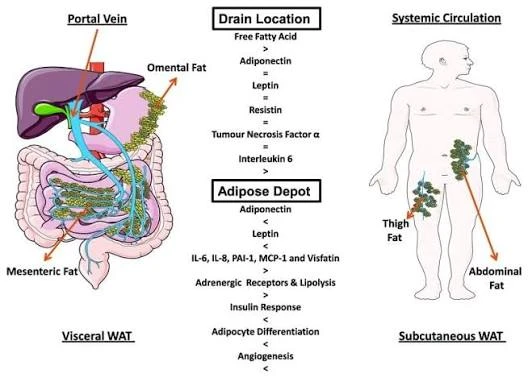
Body weight alone does not capture how fat is distributed throughout the body. Two individuals with similar body weights may have vastly different levels of visceral and subcutaneous fat. Visceral adipose tissue is metabolically active and is linked to alterations in lipid and glucose metabolism. Because of these differences, scientists studying metabolic health increasingly distinguish among visceral fat, subcutaneous fat, liver fat, and other tissue compartments. The growth hormone pathway is one biological system being investigated in this context. The hypothalamus naturally produces GHRH, which helps regulate the pituitary gland's release of growth hormone. Growth hormone subsequently influences various downstream processes, including lipolysis and the production of insulin-like growth factor-1 (IGF-1).
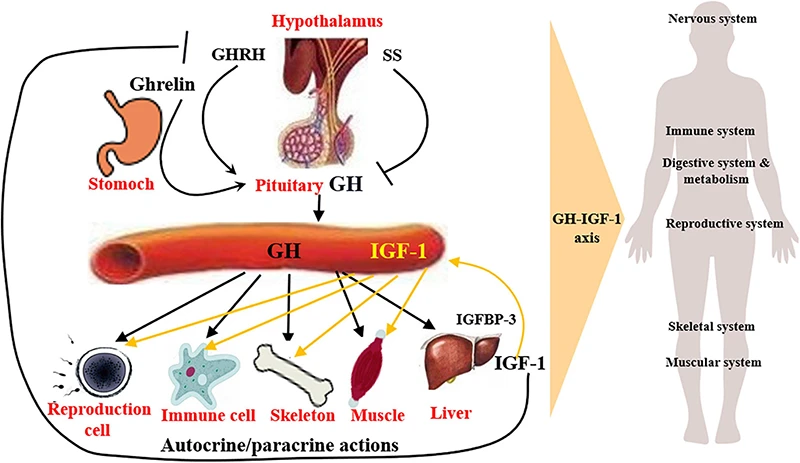
Tesamorelin mimics the activity of GHRH. Rather than directly supplying growth hormone, it stimulates the pituitary gland to increase endogenous GH secretion. This makes the compound particularly useful for studying the link between hormonal signaling and regional fat distribution. This mechanism also distinguishes tesamorelin from recombinant human growth hormone. Because the two approaches act on different points of the GH signaling pathway, researchers can explore the differences between "upstream stimulation of endogenous hormone release" and "direct hormone administration."
What have clinical studies revealed about visceral fat?
Scientific interest in this pathway is supported by clinical research, particularly studies involving patients with HIV-associated lipodystrophy and excess abdominal fat.
In a randomized, placebo-controlled study involving 404 subjects with HIV infection and excess abdominal fat, six months of treatment with tesamorelin resulted in a 10.9% reduction in visceral adipose tissue, compared to a 0.6% reduction in the placebo group. Researchers also observed changes in truncal fat, waist circumference, and waist-to-hip ratio. During treatment, IGF-1 (insulin-like growth factor-1) levels increased.
Another clinical study examined 50 HIV-infected adults receiving antiretroviral therapy who had abdominal fat accumulation. After six months, the tesamorelin group showed less visceral adipose tissue than the placebo group. The study also reported reduced liver fat, although researchers described these findings as preliminary and emphasized the need for further research.
An earlier study also investigated the effects of a GHRH (growth hormone-releasing hormone) analog in adults with HIV-associated abdominal fat accumulation. After 26 weeks, visceral adipose tissue decreased by 15.2% in the treatment group, whereas it increased by 5.0% in the placebo group. The study also reported changes in IGF-1 and various lipid profile markers.
More recent evidence continues to explore the relationship between GHRH-related signaling and body composition. A meta-analysis of randomized controlled trials involving individuals with HIV-associated lipodystrophy showed reductions in visceral adipose tissue, truncal fat, liver fat percentage, and waist circumference, alongside an increase in lean body mass. However, the analysis found no significant reductions in subcutaneous adipose tissue or BMI (body mass index).
These findings matter because they show that changes in fat distribution don't necessarily come with significant changes in overall body weight. For researchers, this distinction offers a more precise approach to studying metabolic and endocrine interventions.
What does this mean for peptide and metabolic research?
Research on tesamorelin reflects a broader shift in peptide science: scientists are increasingly focusing on compounds' specific biological mechanisms rather than evaluating them based on visible changes in body weight.
The GHRH-GH-IGF-1 pathway offers diverse research opportunities. Scientists can investigate how stimulating GHRH receptors affects endogenous GH (growth hormone) secretion, how changes in GH influence adipose tissue metabolism, and why visceral fat may respond differently from subcutaneous fat.
The selectivity of the observed changes is particularly significant. Clinical studies report a reduction in visceral adipose tissue without a corresponding decrease across all subcutaneous fat depots. This has prompted discussions regarding whether differences in tissue biology, hormonal sensitivity, or metabolic activity drive these divergent responses.
This pathway is also closely linked to research on hepatic fat, lipid metabolism, and lean body mass. However, findings from specific clinical populations should not be directly extrapolated to healthy individuals, nor should they be interpreted as a basis for routine weight loss. Regulatory status is another important distinction.
In laboratory settings, tesamorelin peptide powder is classified as a research material rather than a direct pharmaceutical substitute. Researchers and institutions utilizing peptide materials typically evaluate key characteristics-such as identity, purity, peptide content, stability, and analytical methods-alongside supporting documentation like the Certificate of Analysis (CoA).
Consequently, tesamorelin research extends beyond the specific peptide drug itself. It also shows how scientists investigate the interplay between endocrine signaling and specific adipose tissue depots.

As metabolic research evolves, the core questions are becoming increasingly specific: researchers are moving beyond simply asking whether an intervention alters body weight to examining which tissues change, which signaling pathways are involved, and why different tissues respond differently.
This research approach deepens understanding of the biological mechanisms linking growth hormone signaling, visceral adipose tissue, and body composition.