




High standards·Traceability·Scalability
Please feel free to contact Xi'an Sonwu Biotech Co., Ltd. for any products you are interested in.
Oligopeptide-68 products
In modern pigment regulation biology and targeted skin whitening biochemical engineering, precisely blocking melanin production signaling pathways at the gene transcription level has always been a core battleground in the research and development of high-end active ingredients. With the deepening research into the regulatory mechanisms of melanocyte transcription factors, an innovative class of biomimetic oligopeptides derived from the transforming growth factor (TGF-beta) signaling pathway has emerged. Among them, Oligopeptide-68, a high-purity polypeptide precisely constructed from a specific amino acid sequence, has become a benchmark for bulk biochemical raw materials for targeted pigmentation reduction and reshaping an even and translucent skin tone due to its highly efficient inhibition of microphthalmia-associated transcription factor (MITF).
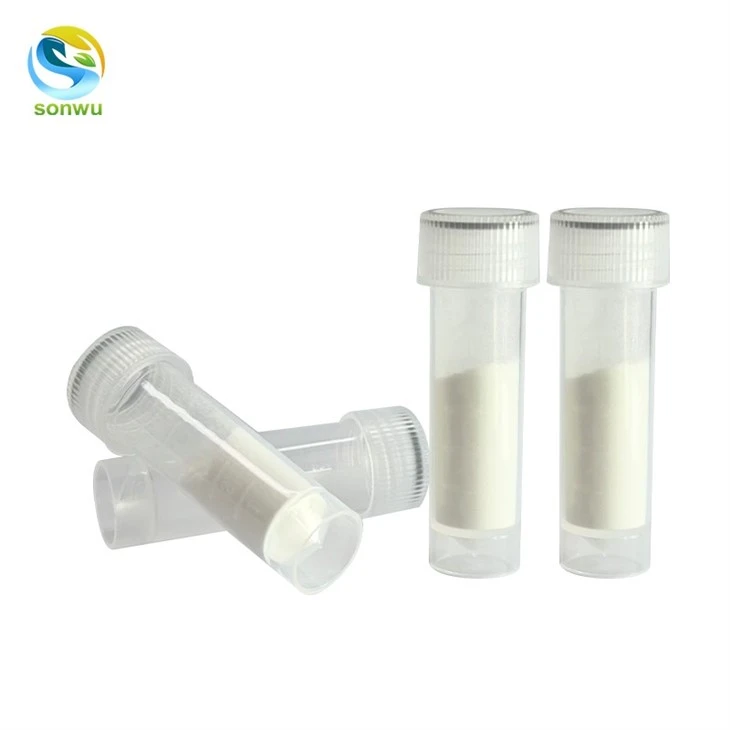
As a cutting-edge functional fine chemical powder, oligopeptide 68 raw powder cleverly incorporates a lipid carrier encapsulation design in its molecular structure, easily overcoming the industrial challenge of conventional peptides' difficulty in penetrating the dense stratum corneum. If you are interested in essence peptide oligopeptide 68, you can contact Xi'an Sonwu Biotech Co., Ltd. Leveraging a rigorous quality control system and advanced purification processes, this source supplier provides you with high-performance underlying active ingredients, fully empowering the commercialization of high-end formulations.

Certificate of Analysis
|
Item |
Specification |
Result |
|
Appearance |
Powder |
Complies |
|
Color |
White powder |
Complies |
|
Particle Size |
100% pass 80 mesh |
Complies |
|
Oder |
Characteristic |
Complies |
|
Taste |
Characteristic |
Complies |
|
Loss on Drying |
≤5.0% |
2.20% |
|
Residue on Ignition |
≤0.1% |
0.05% |
|
Residual acetone |
≤0.1% |
Complies |
|
Residual Ethanol |
≤0.5% |
Complies |
|
Heave Mentals |
≤10ppm |
Complies |
|
Na |
≤0.1% |
<0.1% |
|
Pb |
≤3 ppm |
Complies |
|
Total Plate |
<1000CFU/g |
Complies |
|
Yeast & Mold |
<100 CFU /g |
Complies |
|
E. Coli |
Negative |
Complies |
|
Salmonella |
Negative |
Complies |
Oligopeptide 68 buy
Xi'an Sonwu Biotech Co., Ltd is a peptide raw material supplier with peptide technology at its core and an international market orientation. Xi'an Sonwu specialize in the R&D, production, and global supply of functional peptides and polypeptide raw materials, serving multiple application areas including muscle building, beauty, hair growth, weight management, nootropics and pharmaceuticals raw materials.
Xi'an Sonwu products have been widely used in the R&D and industrialization projects of customers worldwide.Based on this, Xi'an Sonwu have received a lot of feedback on Sonwu products. Therefore, if you need it,please contact Xi'an Sonwu.
Xi'an Sonwu not only provides large-scale production services but can also provide sample packages to customers first.
|
Form |
Sample Amount |
The Minimum Of Quantity |
|
Powder |
1g |
1g |
Customers' Good Comment

OEM Service
Xi'an Sonwu not only supplies essence peptide oligopeptide 68, but also customizes products according to customer needs. In addition, Sonwu offers customized packaging services, repackaging products according to customer requirements.
So any customers could customize package they want. And items below can be supplied.
1. Customized bottles(size, color, material, style)
2. Customized packaging(vacuum foil packaging, box, drum)
3. Customized label(paint film, matte film, optical mask)

Is Oligopeptide 68 good for the skin
1. Targeted Inhibition of MITF Gene Expression, Blocking Melanin Production at the Nucleus Source
This is the most significant apparent benefit of oligopeptide 68 raw powder, representing its core commercial value. Excessive melanin synthesis is typically controlled by MITF (microphthalmia-associated transcription factor) within the cell nucleus. This high-purity peptide precisely penetrates the cell membrane, directly intervening in the transcriptional cascade within the nucleus and strongly downregulating the gene expression levels of MITF and its downstream key rate-limiting enzymes (such as tyrosinase, TRP-1, and TRP-2). This mechanism, which directly "shuts down the master switch" at the nucleus source, completely disrupts the large-scale melanin synthesis pathway, keeping the basal production capacity of tissues at an extremely low level when exposed to UV radiation or micro-inflammatory stimuli.
2. Blocking the Efficient Transport of Melanosomes, Significantly Improving Surface Light Refraction and Evenness
The macroscopic manifestation of pigmentation depends not only on the total amount synthesized but also on the efficiency of melanosome transfer to surrounding keratinocytes. This active molecule exhibits excellent transport-blocking efficacy in regulating the intercellular microenvironment. It slows down the directional transport rate of melanosomes in dendritic structures, promoting a uniform distribution of pigment granules on the surface rather than localized clustering. This homogenizing microscopic modification significantly improves the light refractive index of the tissue surface, gradually replacing the dark areas caused by uneven pigmentation with a clear, even, and healthy tone.
3. Synergistic Antioxidant and Anti-Photoaging, Maintaining Long-Term Homeostasis of the Substance Microecology

This peptide molecule, while regulating melanin metabolism, also possesses extremely strong synergistic antioxidant properties. It effectively neutralizes early free radicals induced by ambient light radiation, preventing physical damage to the basal cell membrane caused by lipid peroxidation. This dual reinforcement of structure and function greatly enhances the tissue's ability to resist external oxidative stress, ensuring that the tissue maintains a high degree of physiological integrity even under complex industrial environments or natural photoaging conditions.
4. Pure Non-Cytotoxic Regulation, Ensuring Safety for Long-Term Compound Formulation
Traditional potent whitening ingredients often come with significant cytotoxicity, achieving temporary effects by killing melanocytes. This polypeptide molecule follows a completely different biological pathway: it does not harm the physical integrity of any cell, nor does it trigger any inflammatory cascade response; it merely intervenes in metabolism through extremely gentle, targeted "gene-level regulation." This highly safe and non-destructive regulatory mode ensures that the target region maintains perfect cell viability and physiological homeostasis even after long-term, high-frequency industrial compounding applications.
How does oligopeptide work
Step 1: Efficient Transmembrane Transport Assisted by Lipid-Based Carriers
Conventional peptides are often rejected when they come into contact with the stratum corneum. However, this raw material incorporates special lipid nanoencapsulation modification in its synthetic design, giving it excellent lipophilicity and penetrability. It can smoothly pass through the intercellular spaces of the stratum corneum, precisely reaching the melanocytes located in the basal layer of the epidermis, and achieving efficient internalization without damaging the cell membrane structure.
Step 2: Precise Release and Receptor Binding of TGF-beta-Mimetic Signals
Once inside the cell, this peptide molecule begins to exert biochemical functions mimicking transforming growth factor (TGF-beta). It precisely recognizes and binds to specific receptors on the melanocyte membrane, initiating a series of precise intracellular signal transduction cascades, rapidly advancing the explicit instruction to "inhibit melanin synthesis" into the cell nucleus.
Step 3: Targeted Inhibition of the MITF Core Transcription Factor
After reaching the cell nucleus, the signal directly acts on the promoter region of microphthalmia-associated transcription factor (MITF). MITF acts as the master switch regulating all melanin synthases, and its activity is strongly suppressed by this polypeptide. Gene transcription efficiency decreases exponentially, preventing the normal translation and synthesis of subsequent tyrosinase family proteins.
Step Four: Complete Termination of the Melanin Synthesis Chain and Substantial Whitening
Due to the absence of the core catalytic enzyme, tyrosine precursors can no longer be converted into melanin macromolecules. This tightly controlled and clean gene regulatory chain, without damaging cell structure, completely severs the pathway of pigmentation at the molecular level, providing impeccable theoretical support for industrial formulations.
Factory
1. Xi'an Sonwu Biotech Co . Itd has established a complete technology platform, covering peptide molecular design, custom synthesis, precision purification, structural identification, and quality control.
2. It strictly adheres to international quality management standards, ensuring that its peptide raw materials meet the high-end requirements of overseas customers in terms of purity, stability, and batch consistency.
3. Looking to the future, it will continue to deepen peptide technology innovation, expand the global cooperation network, and strive to become a trusted long-term peptide raw material solution partner for international customers.


Certificate

HALAL

HACCP

CERES

ISO9001

ISO14001

ISO22000
Packaging

Logistics

In addition to guaranteeing the product quality, the other most vital thing is clients could receive the goods smoothly. So, Xi'an Sonwu supply all kinds of couriers according to different needs.

FAQ
Q1: At the gene regulation level, what are the fundamental differences between this oligopeptide and traditional tyrosinase inhibitors (such as arbutin)?
Traditional arbutin and similar ingredients are mostly "terminal competitive inhibitors," meaning they compete for the catalytic active site after the enzyme has been synthesized. They are easily affected by changes in substrate concentration and have limited effectiveness. This oligopeptide, however, acts directly on the upstream cell nucleus, reducing the total amount of enzyme synthesized at the gene transcription level (inhibiting MITF). This "bottom-up" gene-level regulation has a decisive advantage in terms of depth and duration of action.
Q2: What are the thermodynamic stability and standard operating procedures for oligopeptide 68 raw powder in large-scale industrial production and complex compound systems?
As a high-purity fine chemical powder, this raw material has good water solubility and stability. However, in large-scale industrial production, to ensure that the fragile peptide bonds are not damaged by high temperatures, it is recommended to pre-dissolve it in the aqueous phase during the final cooling stage of the emulsification process (when the material temperature drops below 40°C) and then slowly add it. Simultaneously, the system's pH value should be precisely controlled within a mild range of 5.0 to 6.5 to ensure zero degradation of its bioactivity over a shelf life of up to two years.
Q3: When planning a top-tier efficacy matrix, how should brands view the synergistic potential of essence peptide oligopeptide 68?
Single-pathway pigment intervention often encounters bottlenecks. Due to its focus on upstream gene regulation, this ingredient is extremely suitable for cocktail-style formulation with ingredients that act on midstream and downstream processes (such as ingredients that block melanosome transfer or antioxidants that scavenge free radicals). If you are interested in oligopeptide 68 for your advanced formulation lines, Xi'an Sonwu Biotech Co., Ltd. can provide you with comprehensive technical parameters, toxicology files, and customized formulation support to help your products achieve breakthroughs in both efficacy and safety.
Email: sales02@sonwu.com
Hot Tags: oligopeptide 68 raw powder, China oligopeptide 68 raw powder manufacturers, suppliers, factory, Acetyl Hexapeptide 38 Powder, Acetyl Tetrapeptide 5 Peptide, Decapeptide 2, GHK Powder, Pentapeptide 18 Powder, Syn Coll Peptide